START WITH THE WORK
A glove that fits
the task.
Describe the work, then check the construction, documentation and fit of the model you are considering.
Identify exposure
Describe contact surfaces, sharp edges, blunt impact and the conditions of the job.
Check handling needs
Consider fingertip feel, tool grip, wet or dry conditions and glove changes.
Read the documents
Check the exact model and design against its datasheet and conformity document.
Trial the fit
Check fingertip reach, palm bunching and grip with the tools used in the task.
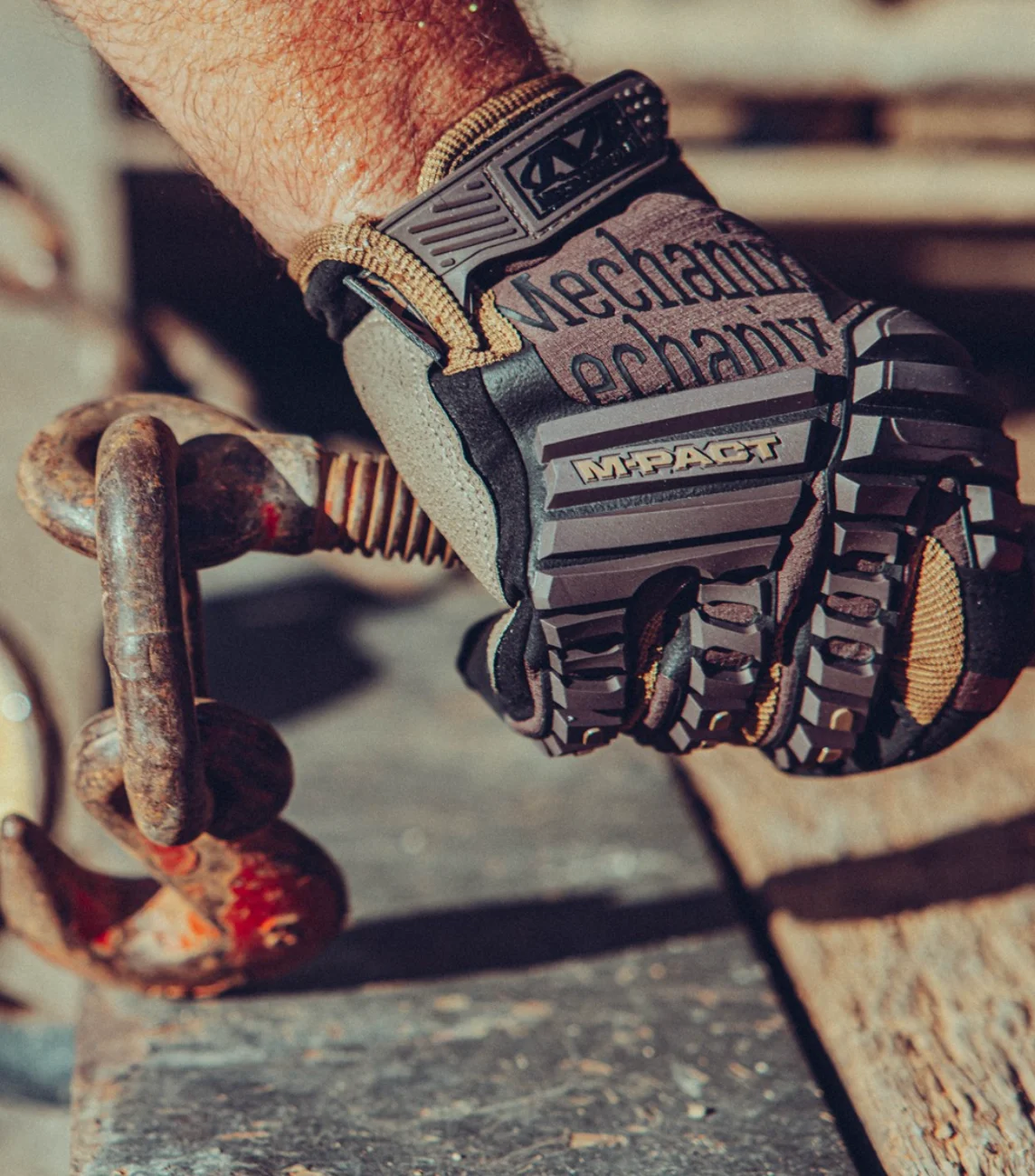
PROTECTION IN CONTEXT
Keep hands clear
of the hazard.
A glove is one part of hand protection. Plan the task, control the equipment and use appropriate handling tools to reduce hand exposure.
These models are not specified here for electrical insulation, chemical protection or unrestricted work near rotating machinery. Follow the task’s approved PPE requirements.
Common selection questions.
Does an impact guard mean a glove is crush-proof?
No. Back-of-hand guards do not make a hand safe in a pinch or crush zone. Keep hands out of the line of fire.
Does the M-Pact model number indicate a cut level?
No. Use the exact model’s documented performance. M-Pact 2 and M-Pact 3 are product names.
Which document should accompany a specification?
The current datasheet and matching Declaration of Conformity for the supplied article. Tell PSC if the order also requires a supply COC.